Sensors and Gauges - Information, Troubleshooting, and Testing
-
Coolant Temperature Gauge Testing
Oil Pressure Gauge Testing
Fuel Level Gauge Testing
Air Flow Sensor Testing
DME Temperature Sensor Testing
Throttle Position Switch Testing
Speed and Reference Sensor Testing
Oxygen Sensor Testing
There are two different styles of coolant temperature gauges used on 924s and 944s. The early style gauge was used on all models of 924s and on 944s up to the 1985 model year. The later gauge was installed on 1985.5 and newer 944s and 968s.
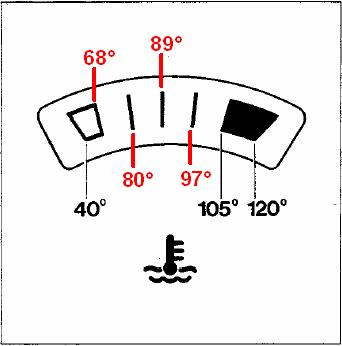
One of the difficult things about using a 924/944/968 coolant temperature gauge is that there are no real temperatures indicated on the gauge face. This can make it difficult to determine if the gauge, cooling system, or cooling fans are operating properly. It is therefore helpful to know what temperatures correspond to the markings on the gauge face. The diagrams below show those relationships. Temperatures are shown in degrees Celsius.
Many times I hear folks ask "what is the normal coolant temperature for a 944?" Well, it's a difficult question to answer because there are a number of factors which can affect coolant temperature. However, generally speaking, in cool to moderate climates (up to about 25 °C) driving on the highway, 944 coolant temperatures will normally run between 80-90 °C. Under these conditions, the system typically runs cool enough that the radiator cooling fans will not run.
In warmer climates (25-35 °C) and in heavy traffic conditions with stop and go driving, coolant temperatures may run as high as 100 °C. The cooling fan(s) should come on at approximately 92 °C to reduce coolant temperature. If your coolant temperature consistently runs higher than 100 °C, it's time to start looking for problems. Realize that the problem could be an actual high temperature problem or it could be a problem with the temperature sensor or gauge.
Time and time again, I hear folks complaining about the car's coolant temperature running significantly higher than normal. When I start talking to them, I frequently find that these symptoms occur after a round of performance modifications where they've increased the horsepower the engine is making. What is frequently overlooked is that when an engine makes more horsepower, it makes more heat and more heat is rejected to the cooling system. Since nothing has been done to increase the capacity of the cooling system, with the increased heat load the steady-state cooling temperatures are naturally going to run higher than before. This means that the cooling fans will run more frequently, run longer, and have a harder time reducing/maintaining coolant temperature in hot weather and in stop and go driving. Realize also that this also means higher steady-state oil temperatures, lower oil viscosity, and hence lower than normal steady-state oil pressures.
|
|
|
 |
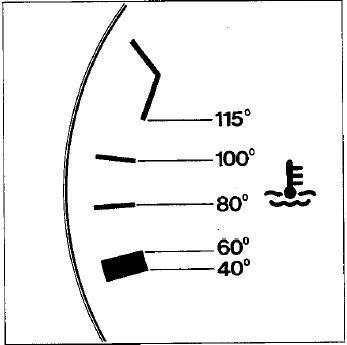 |
| The numbers in red on the early gauge were determined by FR Wilk through interpolating the Bosch sender curves. | |
Testing Coolant Temperature Gauges
Tools
- Multimeter
- Variable Resistance Potentiometer (Minimum 0-500 ohms)
- Test Leads
Procedure
- Disconnect the two spade connector leads from the temperature gauge sensor.
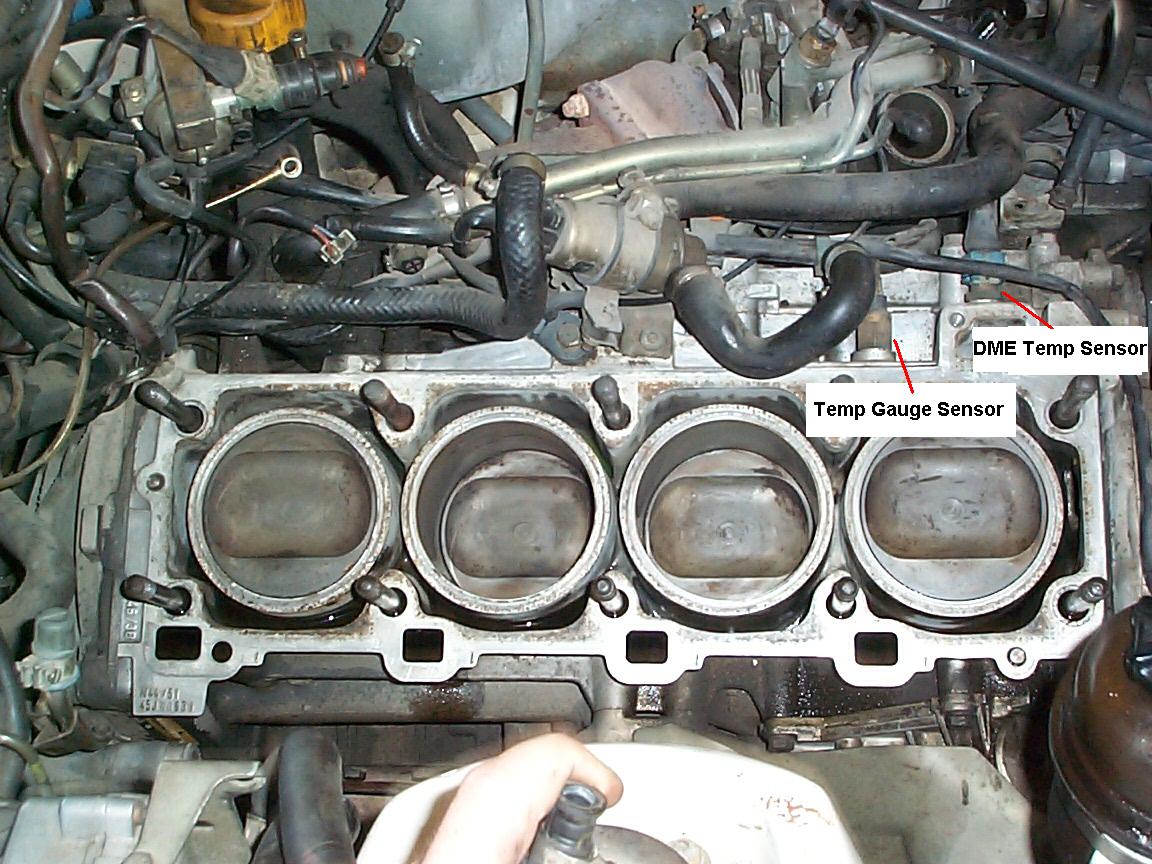
- Using the appropriate table below, set the variable potentiometer to one of the resistances listed.
Early 944s (pre-1985.5), 924 Temperature (°C) Resistance (Ohms) 40 287.4 105 33.6 120 22.7 Late 944s (1985.5 and Newer) Temperature (°C) Resistance (Ohms) 40 287.4 60 134.0 80 69.1 100 38.5 115 25.8 - Connect the larger of the disconnected sensor leads to one terminal of the variable potentiometer being careful not to change the potentiometer setting. Connect the other terminal of the variable potentiometer to a grounding point in the engine compartment.
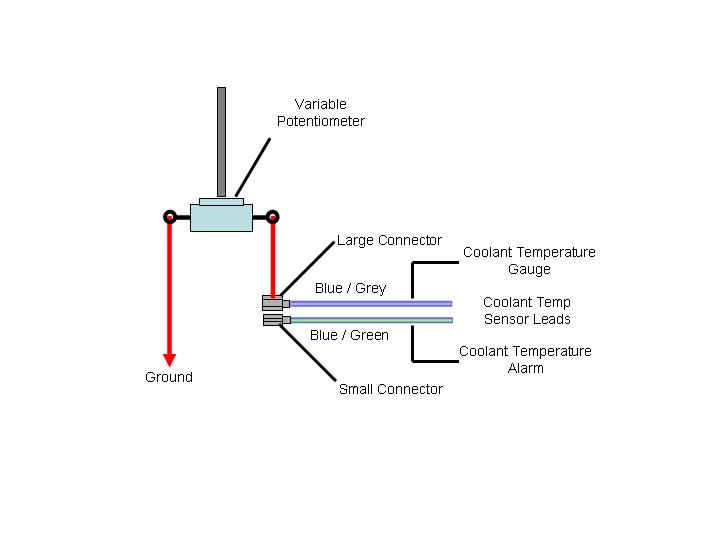
- Turn the ignition switch to the ON position.
- Check the temperature gauge reading compared to the required indication for the resistance on the variable potentiometer.
- Repeat as necessary for all temperature-resistance combinations in the table. When you have finished, turn the ignition switch OFF, remove the potentiometer and reconnect the leads to the sensor.
- If the gauge appears to be reading normally and you still suspect that the temperature readings are abnormal during engine operation, proceed to the temperature sensor testing procedure.
- If you determine that the gauge is bad, replace it or send it to an authorized VDO repair facility for service.
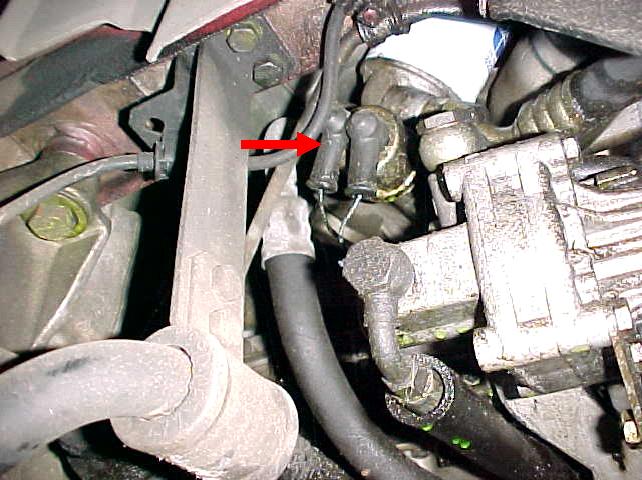
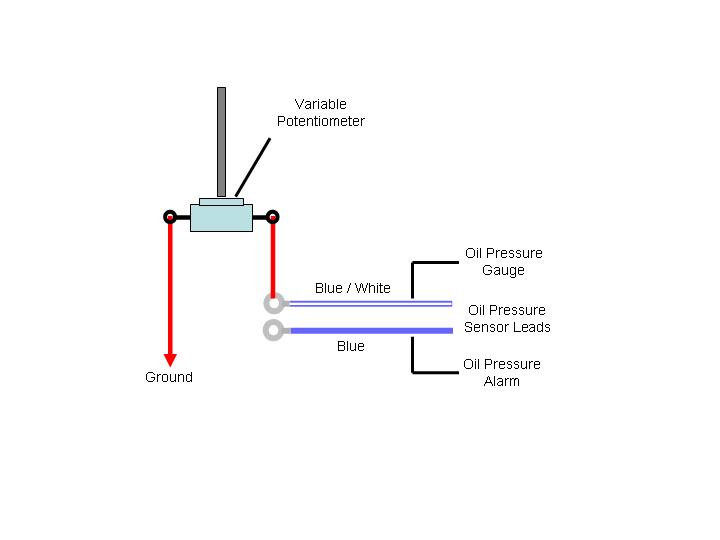
Testing and repair for the fuel level indication is covered in ELECT-13, Fuel Level Indication Problems / Repairs.
The Air Flow Meter (AFM) testing section has been moved to a stand-alone procedure which is more accurate and now includes instructions for cleaning and repairing erratic operation. For AFM testing, refer to ELECT-22.
DME Temperature Sensor Testing
Throttle Position Switch Testing
Throttle Position Switch testing is covered in FUEL-06, Throttle Position Switch Information, Troubleshooting, Replacement, and Adjustment.
Speed and Reference Sensor Testing
Speed and Reference sensor testing is covered in IGN-02, Checking, Replacement, and Adjustment.